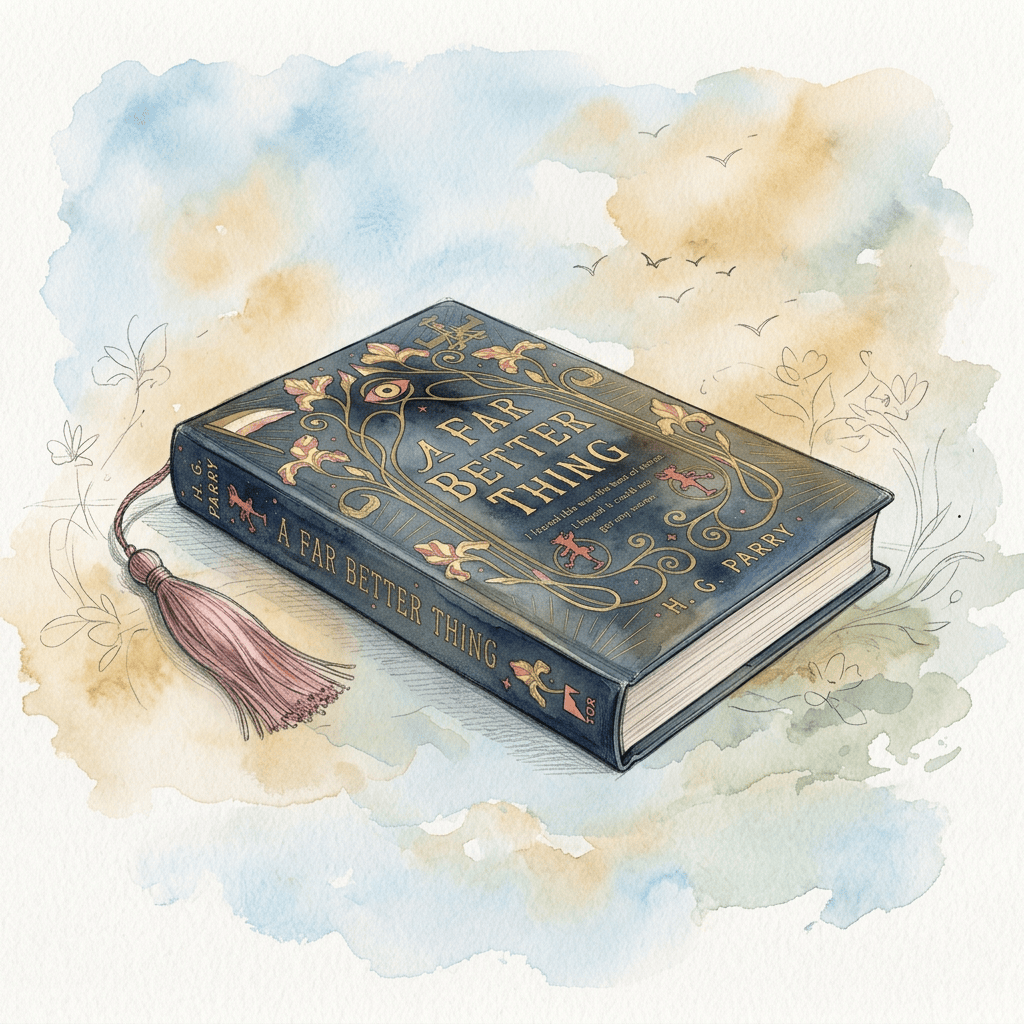
A Far Better Thing by H.G. Parry is a poignant, dark fantasy of fae revenge set against the backdrop of the French Revolution. When I first picked it up, I had no idea it was a magical reimagining of Charles Dickens’s A Tale of Two Cities. Having studied To Kill a Mockingbird and Lord of the Flies for my English GCSEs instead, the original story was completely unfamiliar to me. The fact that it was a retelling went right over my head until I finished the final page and looked up Parry on Goodreads.
We follow Sydney Carton, a cynical human forced into servitude by the fae. Most popular fantasy novels romanticise the fae, making it easy to end up “Team Fae”. Here, Parry takes a refreshingly brutal approach, they are absolutely evil creatures. Her world building is brilliant: the faerie realm is dynamic rather than static, constantly shifting in a way that causes motion sickness, with only the “Children’s Quarter” mirroring the mortal world. Stolen children face a grim choice at age thirteen: become a faery themselves or be forced into mortal servitude.
It’s within this bleak system that we meet original characters like Addison Thorne, a cheerful, eccentric stage magician with a reckless obsession with the faerie realm, and Rosemary, a mortal servant who dreams of freeing the children trapped in the fae realm. Characters like Addison and Rosemary add extra layers to the story, showing how humans attempt to survive, build connections, and endure under the thumb of such sadistic creatures. Leaning into these darker elements of folklore adds a heavy, devastating weight to the entire plot.
While the story’s pacing drags a bit in the middle, it accelerates dramatically in the final stretch. I found myself staying up late into the night, desperate to see how Sydney’s story would end. In hindsight, I’m actually glad I didn’t know the plot of A Tale of Two Cities. Reading it blind meant I was entirely gripped by the tension. The ending hit me hard, it was deeply heart warming, bittersweet, and left me feeling emotionally empty in the best way possible. Sydney’s selfless act of sacrifice at the climax is unforgettable, and the final paragraphs linger long after you close the book.
Experiencing this story without knowing its literary roots allowed me to enjoy it purely as a standalone fantasy and form my own untainted opinion. Looking back at Dickens’s synopsis now, I can see how seamlessly Parry wove the two worlds together. The addition of fae lore never felt forced, it felt entirely natural.
Compared to other fantasy stories I’ve read recently, A Far Better Thing stands out for its seriousness and its gritty, realistic handling of the French Revolution. It was a thoroughly refreshing change of pace, and I’d recommend it to anyone wanting a dark, immersive fantasy.
I’ll certainly be checking out H.G. Parry’s other books off the back of this!


Leave a comment